



Byzantine Studies Research Center
CV
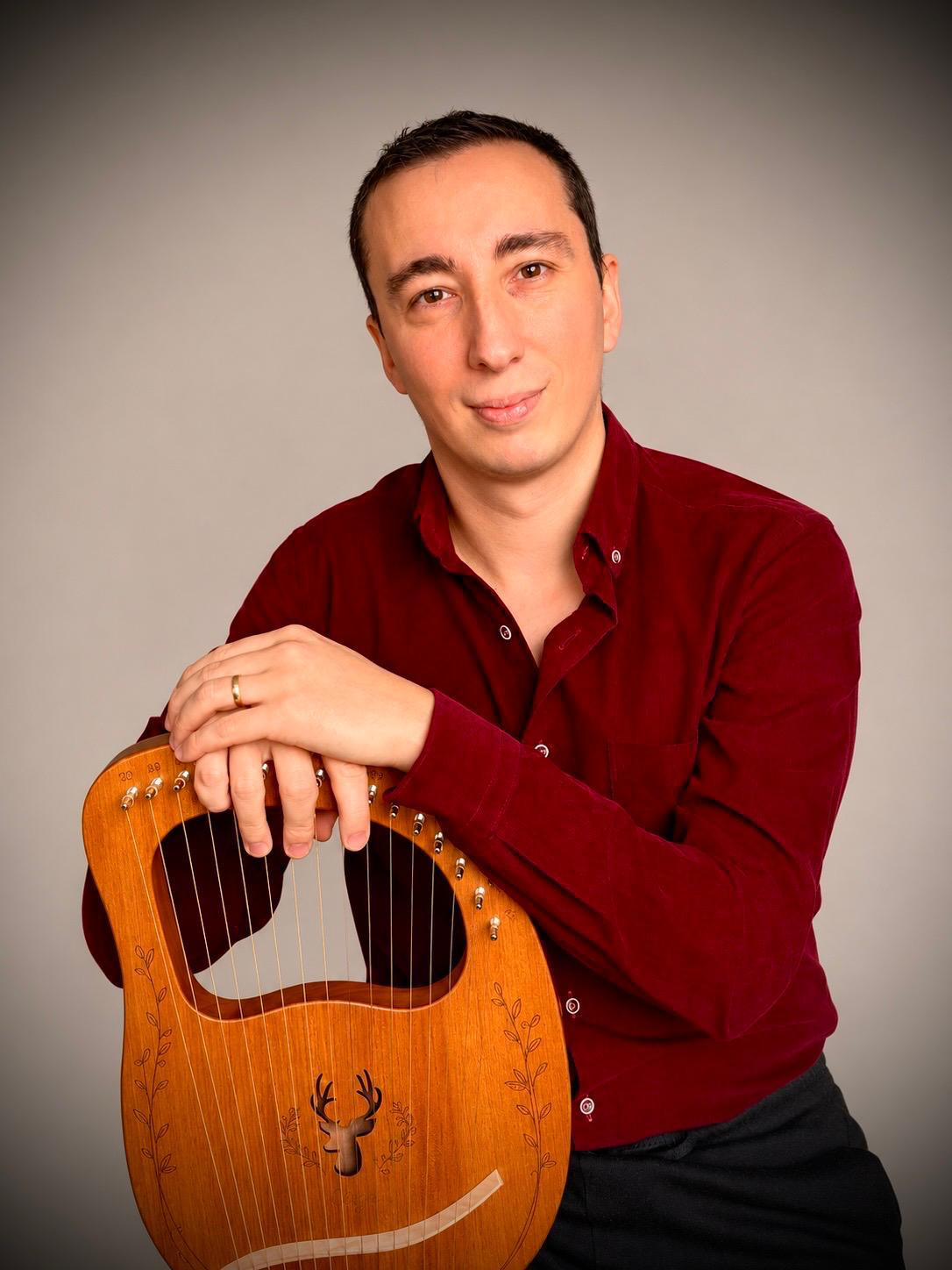
Erdinç Yalınkılıç is a musicologist who studies the history of knowledge through music. Drawing on intellectual history and the history of science, he examines how ancient ideas about music were transmitted, reinterpreted and taught in Byzantium and the wider medieval eastern Mediterranean. His doctoral research on Manouēl Bryennios’s Harmonika examined how a Byzantine scholar reworked ancient Greek accounts of musical intervals and tuning. His current work explores the relationship between mathematical reasoning and musical practice and extends to early Ottoman music theory. As a composer and singer, he co-founded Konstantiniyye Collective, which brings research on the musical traditions of the eastern Mediterranean to wider audiences through lecture-recitals and workshops. He is also a selected participant in the 2026 Dumbarton Oaks Virtual Mentorship Programme, which supports research in Byzantine, Syriac, and Armenian studies, and in Studying East of Byzantium XIII, a research workshop on the medieval Christian East organised through Hellenic College Holy Cross and Harvard University.
Konstantiniyye Collective website: https://www.konstantiniyyecollective.com
Title of the Project:
Musical Knowledge and Authority in Late Byzantine Constantinople
Project Description:
How did people learn about music in Byzantine Constantinople, and whose knowledge carried authority? Histories of Byzantine music have often centred on church chant. This project examines the place of harmonics, the study of musical intervals and their numerical relationships, in that wider history.
A starting point is Nikolaos Mesaritēs’s description of the Church of the Holy Apostles, written around 1200. His account places the instruction of young singers alongside a discussion of harmonics. The project uses this literary scene to ask how Byzantines understood different kinds of musical expertise and what such a description can tell historians about how music was taught. At Boğaziçi, the project brings the close reading of Greek musical texts into discussion with
historians working on education, religious institutions and the intellectual life of
Constantinople.