

(YENİ TARİH 26 Ekim 2026) Konuşma - Elizabeth A. Murphy: "Bir Topluluk İnşa Etmek: Roma ve Geç Antik Çağ Doğu Akdeniz'inde Çömlekçiler" (İngilizce)
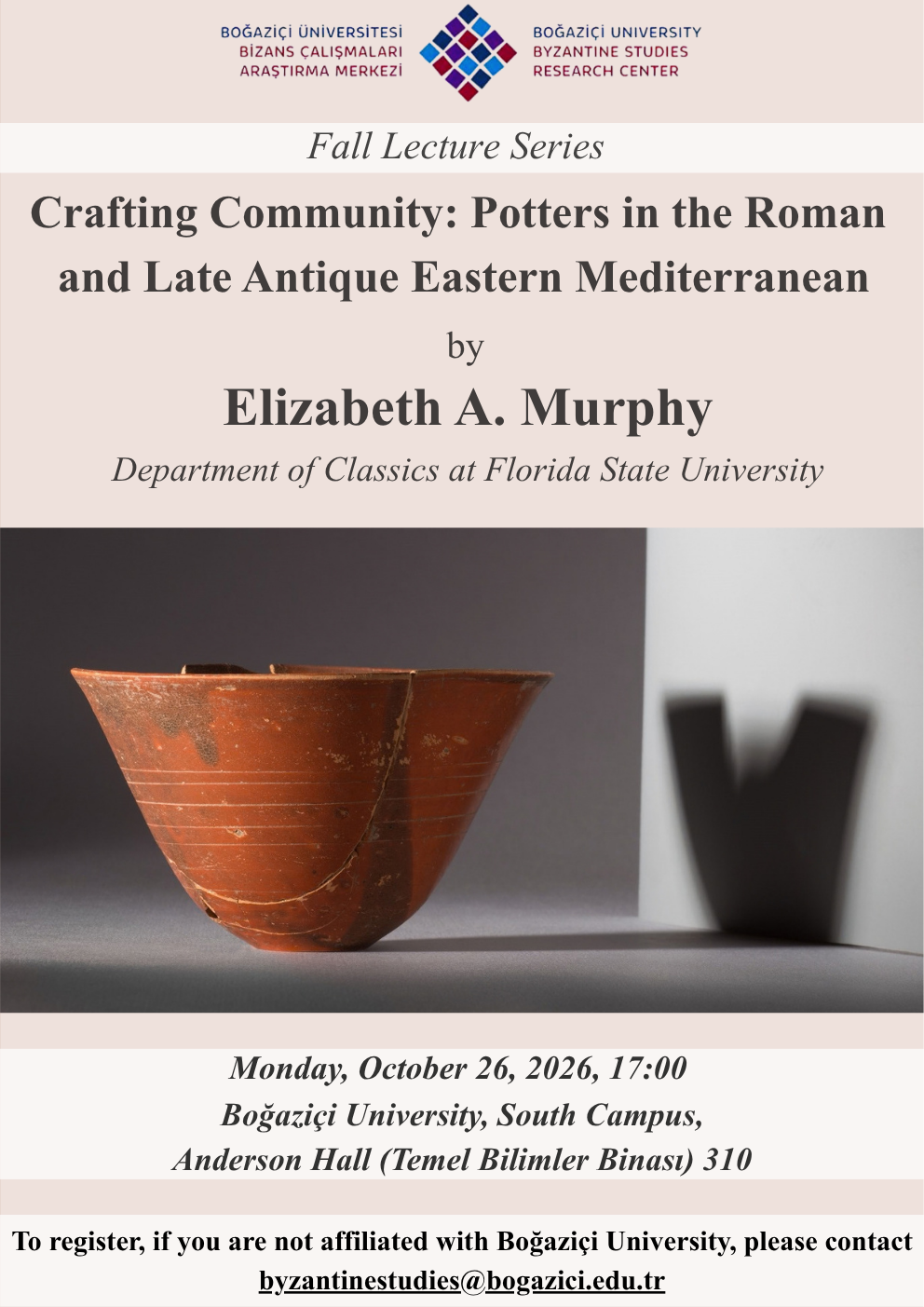
ELIZABETH A. MURPHY'NİN KONUŞMASI 26 EKİM 2026 TARİHİNDE GERÇEKLEŞECEKTİR.
Boğaziçi Üniversitesi Bizans Çalışmaları Araştırma Merkezi, Elizabeth A. Murphy'nin "Bir Topluluk İnşa Etmek: Roma ve Geç Antik Çağ Doğu Akdeniz'inde Çömlekçiler" ("Crafting Community: Potters in the Roman and Late Antique Eastern Mediterranean") başlıklı konuşmasına sizleri davet ediyor.
Konuşma, İngilizce olarak Boğaziçi Üniversitesi, Güney Yerleşkesi, Albert Hall (Temel Bilimler Binası), 310 salonunda 26 Ekim 2026'da saat 17:00'da gerçekleşecektir.
Boğaziçi Üniversitesi mensubu olmayan katılımcıların kayıt için byzantinestudies@bogazici.edu.tr adresiyle iletişime geçmeleri rica olunur.
İngilizce olarak yapılacak konuşma ile bilgiler şöyledir:
Özet
Pottery workshops represent one of the most common industrial contexts in the archaeological record of the Roman and Late Antique periods. In this talk, we will examine that evidence for the rich social lives of potters living and working across the eastern Mediterranean in these periods. By investigating issues like apprenticeship and learning, ritual practices in the workplace, and conflicts among craft neighbors, the talk moves beyond an economic and functionalist interpretation of workshops to demonstrate their central place in the social lives of ancient working communities.
Özgeçmiş:
Elizabeth A. Murphy is Associate Professor of Archaeology in the Department of Classics at Florida State University (US). Her research investigates the lives of common workers and tradespeople—segments of Roman and Late Antique society who are accessible via a theoretically informed analysis of their material culture and workspaces. In doing so, she applies ideas drawn from social archaeology, material culture studies, and ancient technology studies to access ancient labor groups and better understand small-scale social dynamics among working people. While an archaeologist in methods and practice, she draws together theoretical perspectives from the fields of history, classics, and anthropology.
