Byzantine Studies Research Center Seminar Series - 3
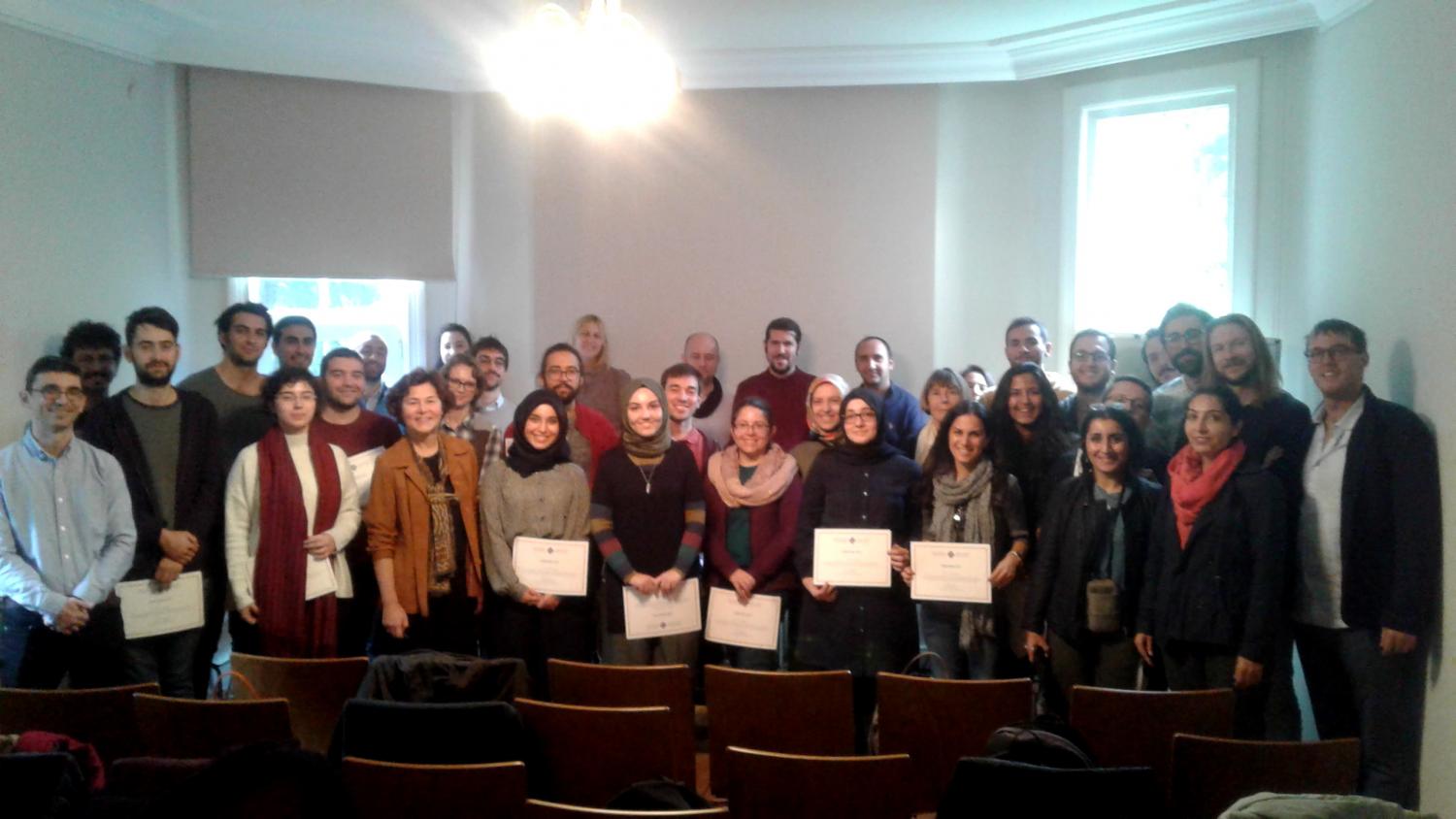
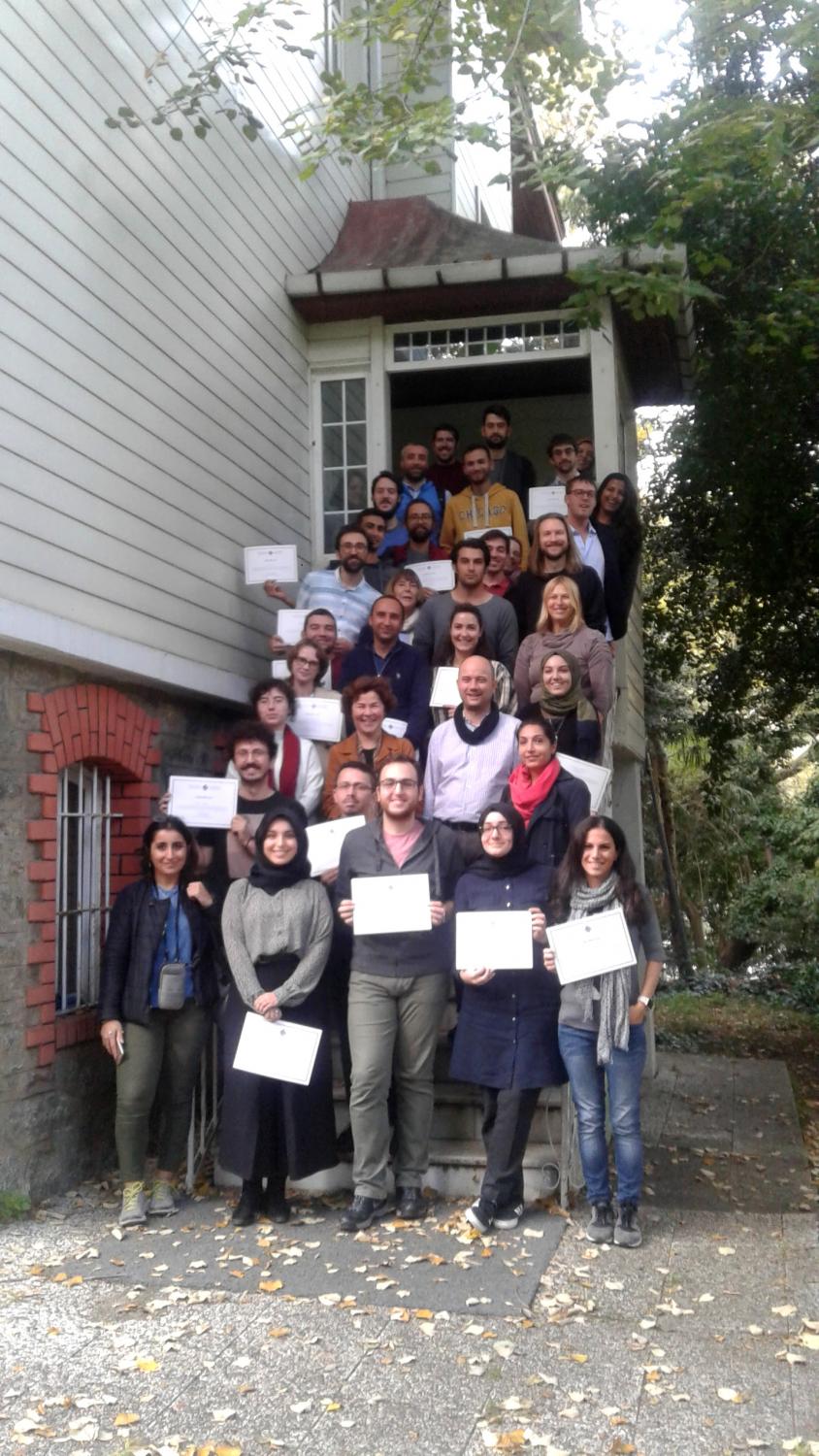
The Third Byzantine Studies Research Center Seminar entitled "Byzantine Epigraphy: Texts and Contexts" has been conducted by Andreas Rhoby ve Ida Toth with the participation of 33 people, on November 4th-5th, 2018. Most of the participants were graduate students from the universities in Turkey with a few students from outside Turkey. In addition, some academics and professionals also participated to the semiar.
Morning classes took place at the Byzantine Studies Research Center as two block classes and afternoon classes have been conducted on site. Applied classes took place at Istanbul Archaeological Museums on Sunday, November 4th; in the Hippodrom and in Little Hagia Spohia Mosque (Church of the Saints Sergius and Bachus) on Monday, November 5th.
Please find the details about the seminar below and visit photo gallery for the photographs.
BYZANTINE EPIGRAPHY: TEXTS AND CONTEXTS
Andreas Rhoby (Austrian Academy of Sciences)
Ida Toth (Oxford University)
4-5 November 2018
It is well known and widely acknowledged that many aspects of ancient Greek and Roman civilization can be accessed only through inscriptional source material. Administrative and legislative actions, and the acts of beneficence, commemoration, and thanksgiving all depended for their promulgation on publically displayed and highly visible epigraphs. Such traditions continued throughout Late Antiquity, a time during which inscriptions still functioned as official announcements as well as becoming an effective way to confess, express, and spread the new religion endorsed by the Roman State - Christianity.
Even after Late Antiquity (ca. AD 600), inscriptions persisted as regular features of Byzantine written culture until, as well as beyond, the fall of Constantinople in 1453. Although there was some decline in the production of stone and mosaic inscriptions, new epigraphic media were employed, such as monumental fresco inscriptions and epigrams on movable objects. Byzantium preserved earlier and produced new inscriptional material: this epigraphic heritage encompasses multiple habits and traditions, and it draws meaning from its distinct archeological, iconographic, topographical, and historical contexts.
The two-day seminar, organized by the Bogazici University Byzantine Studies Research Center, will address a wide range of issues relating to Byzantine epigraphic traditions with an aim to show how diverse kinds of inscribed writings contribute to our knowledge of the society and culture that produced them.
The classes, held in English, will take place at the Boğaziçi University Byzantine Studies Research Center and in a number of Byzantine sites in Istanbul. Participants will receive a certificate at the end of the program.
ANDREAS RHOBY
ANDREAS RHOBY works at the Austrian Academy of Sciences, Institute for Medieval Research. He is deputy head of the Division of Byzantine Research, where he also functions as group leader of the research cluster "Communities and Landscapes". In addition, he is a Privatdozent at the University of Vienna and chair of the commission "Corpus Fontium Historiae Byzantinae" and, together with Ida Toth, a coordinator of the International Commission for Byzantine Epigraphy of the Association Internationale des Etudes Byzantines. His publications include a 4-volume corpus of Byzantine inscriptional epigrams. His main research interests are Byzantine literature, especially poetry, epigraphy and cultural history.
IDA TOTH
IDA TOTH holds the posts of Senior Lecturer and Research Fellow at Oxford University, where she convenes graduate courses in Byzantine Greek and Byzantine Epigraphy. She is a historian of Byzantine literary culture with research interests in rhetoric, narrative prose, and public display of texts. She has published on late Byzantine imperial orations, on the Medieval Greek and Slavonic transmission of wisdom literature, and on Byzantine inscriptional traditions in the seventh, eleventh and thirteenth centuries. She is a member of the Executive Committee of the Society for the Promotion of Byzantine Studies, and, together with Andreas Rhoby, a coordinator of the International Commission for Byzantine Epigraphy (AIEB).
FELLOWSHIPS AND APPLICATION
The program is open to applicants (students or professionals) from Turkey who have an advanced level of English and an ability to read the Greek alphabet at the minimum level.
The seminar is free of charge. Transportation expenses of the participants coming from outside Istanbul as well as lunch on Sunday and Monday for all the participants will be met by the Boğaziçi University Byzantine Studies Research Center.
Candidates should send by e-mail their one-page-long statement of purpose indicating the relevance of this program for their studies/career and providing the background for their language skills in English and Ancient Greek.
The deadline for application is 26 October 2018.
Applications should be sent to byzantinestudies@bogazici.edu.tr